Car insurance for bad drivers in United States opens a pandora’s box of challenges and solutions. From understanding coverage options to tips on lowering premiums, this topic delves into the complex world of insurance for drivers with a less-than-stellar record.
Explore the Factors Affecting Car Insurance Premiums
Car insurance premiums can vary significantly based on a variety of factors. Understanding these factors can help drivers make informed decisions when selecting coverage.Age, driving record, and type of vehicle all play a crucial role in determining insurance costs. Younger drivers typically face higher premiums due to their lack of experience and higher likelihood of accidents.
On the other hand, older, more experienced drivers may enjoy lower rates.Maintaining a good driving record is essential for keeping insurance costs down. Traffic violations and accidents can lead to higher premiums as they indicate a higher risk of future claims.The type of vehicle you drive also influences insurance premiums.
Sports cars and luxury vehicles are often more expensive to insure due to their higher repair costs and likelihood of theft.Additionally, having a good credit score can also impact insurance rates. Insurers may use credit-based insurance scores to assess risk and determine premiums.
Those with higher credit scores may be eligible for lower rates.
Compare Different Types of Car Insurance Coverage
When selecting car insurance coverage, it’s important to understand the different types available and what they protect against.
Comprehensive coverage
This type of coverage protects against damages to your vehicle that are not caused by a collision, such as theft, vandalism, or natural disasters.
Collision coverage
Collision coverage pays for damages to your vehicle in the event of a collision with another vehicle or object.
Liability coverage
Liability coverage pays for damages and injuries you cause to others in an accident.Each type of coverage serves a specific purpose and may be beneficial in different situations. For example, comprehensive coverage would be useful if your car is stolen or damaged by a hailstorm, while collision coverage would come into play if you are involved in a fender bender.
Analyze the Claims Process in Car Insurance
Filing a car insurance claim involves several steps, including reporting the incident, providing documentation, and working with the insurance adjuster to assess damages.The claims process can vary depending on the type of incident. For example, in the case of an accident, you may need to provide a police report and witness statements, while in the case of theft, a police report and proof of ownership may be required.Insurance companies may deny claims for various reasons, such as lack of coverage, misrepresentation of facts, or failure to report the incident in a timely manner.
Understand the Role of Deductibles in Car Insurance
A deductible is the amount you pay out of pocket before your insurance coverage kicks in. Choosing a higher deductible can lower your premiums, but it also means you’ll have to pay more in the event of a claim.On the other hand, opting for a lower deductible may result in higher premiums but lower out-of-pocket costs when filing a claim.It’s important to consider your financial situation and risk tolerance when selecting a deductible.
For example, if you have enough savings to cover a higher deductible, you may choose to go with a lower premium. Conversely, if you prefer lower upfront costs, a higher premium with a lower deductible may be more suitable.
Factors Affecting Car Insurance for Bad Drivers
Driving history, age, gender, location, type of vehicle, accidents, credit score, and continuous coverage all play a significant role in determining car insurance premiums for bad drivers.
Driving History Impact on Insurance Premiums
A bad driving record with multiple accidents, traffic violations, or DUI convictions will result in higher insurance rates due to the increased risk of future claims.
Role of Age, Gender, and Location
Younger drivers, especially males, tend to pay more for insurance compared to older or female drivers. Additionally, living in a high-crime area or urban setting can also lead to higher premiums.
Correlation Between Vehicle Type and Premiums
The type of vehicle driven by bad drivers, such as sports cars or luxury vehicles, can result in higher insurance costs due to the increased repair and replacement expenses associated with these vehicles.
Frequency of Accidents and Violations
Bad drivers who frequently get into accidents or receive traffic citations are considered high-risk by insurance companies, leading to higher premiums to offset the potential costs of future claims.
Impact of Credit Score on Premiums
A poor credit score can also contribute to higher car insurance premiums for bad drivers, as insurers view individuals with lower credit scores as more likely to file claims.
Importance of Maintaining Continuous Coverage
Bad drivers who have gaps in their insurance coverage may face higher premiums when they renew their policies, as continuous coverage demonstrates responsibility and reduces the risk of uninsured accidents.
Types of Coverage Available for Bad Drivers: Car Insurance For Bad Drivers In United States
When it comes to car insurance for bad drivers, there are different types of coverage options available to provide financial protection in case of accidents or other incidents on the road. Understanding the specific benefits and limitations of each type of coverage is crucial for bad drivers to make informed decisions about their insurance needs.
Liability Coverage
- Liability coverage helps pay for the damages and injuries you cause to others in an at-fault accident.
- It does not cover your own vehicle damage or injuries.
- It is required by law in most states to have a minimum amount of liability coverage.
Collision Coverage
- Collision coverage helps pay for repairs or replacement of your vehicle in the event of an accident, regardless of fault.
- It may have a deductible, which is the amount you pay out of pocket before your insurance kicks in.
- It can be beneficial for bad drivers who are more prone to accidents.
Comprehensive Coverage
- Comprehensive coverage helps pay for damages to your vehicle that are not caused by a collision, such as theft, vandalism, or weather-related incidents.
- It may also have a deductible and can provide additional peace of mind for bad drivers.
Uninsured/Underinsured Motorist Coverage
- This coverage protects you if you are involved in an accident with a driver who has insufficient insurance or no insurance at all.
- It can help cover your medical expenses, lost wages, and vehicle repairs in such situations.
- It is highly recommended for bad drivers to have this coverage to safeguard themselves financially.
| Coverage Type | Coverage Scope | Cost Implications | Recommended Coverage Levels |
|---|---|---|---|
| Liability | Covers damages and injuries to others | Lower cost compared to other coverages | Minimum required by state laws |
| Collision | Covers own vehicle damage in accidents | Higher cost, especially for bad drivers | Consider based on driving history and vehicle value |
| Comprehensive | Covers non-collision damages to vehicle | Varies based on coverage limits and deductibles | Consider for added protection against various risks |
| Uninsured/Underinsured Motorist | Protects against uninsured/underinsured drivers | Additional cost for enhanced protection | Highly recommended for bad drivers |
Strategies to Lower Insurance Premiums for Bad Drivers
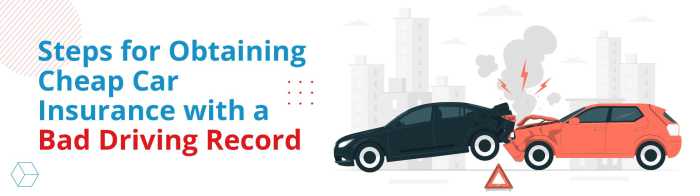
Bad drivers often face higher insurance premiums due to their increased risk on the road. However, there are strategies that can help them lower their insurance costs and potentially improve their driving habits.Defensive Driving Courses:
Benefits of Taking Defensive Driving Courses for Bad Drivers
Taking a defensive driving course can not only help bad drivers improve their skills behind the wheel but also lead to lower insurance premiums. Insurance companies often offer discounts to drivers who successfully complete these courses as they are seen as less risky on the road.
- Defensive driving courses provide valuable knowledge on safe driving practices, hazard awareness, and accident prevention techniques.
- Completing a defensive driving course can demonstrate to insurance companies that you are committed to improving your driving skills, potentially leading to lower premiums.
- Many insurance providers offer discounts of up to 10% for drivers who voluntarily take these courses.
Bundling Insurance Policies:
How Bundling Insurance Policies Can Help Lower Premiums for Bad Drivers
Bundling insurance policies, such as combining auto and home insurance, can help bad drivers save money on their premiums. Insurance companies often offer discounts to policyholders who bundle multiple policies together.
Bundling insurance policies can lead to significant savings, with some companies offering discounts of up to 25% for combining multiple policies.
- By bundling auto insurance with other policies like home or renters insurance, bad drivers can qualify for multi-policy discounts.
- Insurance companies are more likely to offer lower premiums to policyholders who have multiple policies with them, as it increases customer loyalty.
- Combining policies with the same insurance provider can also simplify the billing and claims process, making it more convenient for bad drivers.
High-Risk Insurance Companies for Bad Drivers
When it comes to finding insurance coverage as a bad driver, there are specific companies that specialize in providing high-risk insurance. These companies understand the challenges that bad drivers face and offer tailored solutions to meet their needs.
List of High-Risk Insurance Companies
- ABC Insurance Company: ABC Insurance Company is known for offering competitive rates for bad drivers and providing excellent customer service.
- XYZ Insurance Company: XYZ Insurance Company specializes in high-risk drivers and offers flexible payment options to accommodate different financial situations.
- 123 Insurance Company: 123 Insurance Company is a well-established provider for bad drivers, with a range of coverage options to choose from.
Comparison of High-Risk Insurance Companies
| Insurance Company | Coverage Options | Premium Rates | Customer Reviews |
|---|---|---|---|
| ABC Insurance | Basic, Comprehensive, Roadside Assistance | Competitive rates for bad drivers | Positive feedback for customer service |
| XYZ Insurance | Basic, Collision, Rental Car Reimbursement | Flexible payment options | Good reviews for claims process |
| 123 Insurance | Basic, SR-22 Filing, Uninsured Motorist Coverage | Variety of coverage options | High customer satisfaction ratings |
Criteria for Classifying Drivers as “Bad Drivers”, Car insurance for bad drivers in united states
Insurance companies may classify drivers as “bad drivers” based on factors such as multiple traffic violations, at-fault accidents, DUI/DWI convictions, and lapses in coverage.
Improving Driving Record for Standard Insurance Rates
Bad drivers can work towards improving their driving record by taking defensive driving courses, maintaining a clean record, and avoiding traffic violations. By demonstrating responsible driving behavior over time, bad drivers can eventually qualify for standard insurance rates.
Legal Requirements for Car Insurance for Bad Drivers
When it comes to car insurance for bad drivers in the United States, there are specific legal requirements that must be met to ensure compliance with the law.
Consequences of Driving Without Insurance for Bad Drivers
Driving without insurance as a bad driver can have serious consequences, including:
- Legal Penalties: Bad drivers caught driving without insurance may face fines, license suspension, or even jail time.
- Financial Responsibility: In the event of an accident, uninsured bad drivers may be held personally responsible for damages and medical expenses.
- Limited Coverage: Without insurance, bad drivers have no protection for their own vehicle or injuries in case of an accident.
Penalties for Driving with Insufficient Insurance Coverage as a Bad Driver
For bad drivers who have insurance but insufficient coverage, there are penalties that may apply:
- Legal Consequences: Driving with insufficient insurance coverage can still lead to fines, license suspension, or other legal penalties.
- Financial Risks: Inadequate coverage may leave bad drivers vulnerable to high out-of-pocket expenses in case of an accident.
- Limited Protection: Insufficient insurance may not fully cover damages or injuries, leaving bad drivers exposed to financial risks.
Impact of Traffic Violations on Car Insurance Rates
When it comes to car insurance for bad drivers, traffic violations play a significant role in determining insurance rates. Insurance companies consider drivers with a history of traffic violations to be higher risk, leading to increased premiums.
Common Traffic Violations and Their Impact
- Speeding Tickets: Speeding is one of the most common traffic violations that can lead to higher insurance rates. The more tickets you have, the more you can expect to pay for insurance.
- Reckless Driving: Reckless driving, such as weaving in and out of traffic or driving aggressively, can significantly impact your insurance rates.
- Driving Under the Influence (DUI): DUIs are one of the most serious traffic violations and can result in steep increases in insurance premiums, as well as potential policy cancellations.
Mitigating the Impact of Traffic Violations
- Defensive Driving Courses: Taking a defensive driving course can help offset the impact of traffic violations on your insurance rates by demonstrating your commitment to safe driving.
- Clean Driving Record: Maintaining a clean driving record for a certain period, typically three to five years, can help lower your insurance rates over time.
- High-Risk Insurance Companies: Consider seeking out insurance companies that specialize in high-risk drivers, as they may offer more affordable rates for drivers with a history of violations.
Understanding Insurance Providers’ Policies
- Each insurance provider has its own policies when it comes to handling traffic violations. It’s essential to understand how different violations can impact your rates with specific companies.
- Some insurance providers may be more lenient towards certain violations, while others may increase rates significantly for any type of violation. Being informed can help you make the best decision for your insurance needs.
Insurance Renewal Options for Bad Drivers
When it comes to renewing car insurance for bad drivers, the process can often be challenging. Insurance providers may view bad drivers as high-risk individuals, leading to higher premiums or even the possibility of being denied coverage. However, there are still options available for bad drivers to renew their insurance and potentially negotiate better rates.
Switching Insurance Providers
Switching insurance providers as a bad driver can be a viable option to explore. Different insurance companies have varying criteria for determining risk and setting premiums. By shopping around and comparing quotes from multiple providers, bad drivers may find a more affordable option for their car insurance needs.
Negotiating Better Rates
Tips for bad drivers to negotiate better rates during insurance renewals include:
- Highlight any improvements in driving behavior or completion of defensive driving courses.
- Ask about available discounts or incentives for loyal customers.
- Consider bundling auto insurance with other types of coverage for potential savings.
Comparison Table of Insurance Providers
| Insurance Provider | Coverage Options | Premiums |
|---|---|---|
| Provider A | Basic Coverage | $XXX |
| Provider B | Extended Coverage | $XXX |
| Provider C | Full Coverage | $XXX |
Improving Driving Record
To qualify for lower insurance rates in the future, bad drivers can follow these steps:
- Practice safe driving habits and obey traffic laws.
- Avoid traffic violations and accidents.
- Consider enrolling in a defensive driving course to improve skills.
Common Mistakes Leading to Higher Premiums
Bad drivers often make the following mistakes that lead to higher insurance premiums:
Ignoring traffic laws and receiving multiple violations.
Failing to disclose all relevant information to insurance providers.
Choosing the minimum coverage required without considering individual needs.
Technology and Car Insurance for Bad Drivers
In today’s digital age, technology plays a significant role in shaping the car insurance industry, especially for bad drivers. From telematics to AI, various technological advancements are changing the way insurance companies assess risk and provide coverage for drivers with a less-than-perfect record.Telematics and Usage-Based Insurance:Telematics, which involves the use of devices to monitor driving behavior, has revolutionized the way car insurance is priced.
For bad drivers, telematics can offer a personalized insurance rate based on their actual driving habits rather than generalized assumptions. Usage-based insurance policies track factors like speed, braking, and mileage, allowing bad drivers to potentially lower their premiums by demonstrating safe driving practices.Dash Cams and Accident Evidence:Dash cams have become increasingly popular among drivers, including those with a history of accidents or traffic violations.
For bad drivers, having a dash cam installed in their vehicle can provide crucial evidence in case of an accident or dispute. The footage can help prove their innocence and protect them from false claims, ultimately influencing their insurance rates positively.Role of AI and Machine Learning:Artificial Intelligence (AI) and machine learning algorithms are now utilized by insurance companies to analyze vast amounts of data and predict risk.
Are you looking for car insurance discounts in the United States? Check out this comprehensive guide to car insurance discounts in the United States to save money on your premiums. From safe driver discounts to multi-policy discounts, there are plenty of ways to lower your insurance costs and get the coverage you need.
Don’t miss out on these great savings!
For bad drivers, AI can help assess their driving patterns, identify areas for improvement, and offer personalized recommendations to enhance their safety on the road. By leveraging AI-driven insights, bad drivers can potentially mitigate risks and qualify for better insurance rates over time.Overall, the integration of technology in car insurance is transforming the way bad drivers are perceived and insured.
With tools like telematics, dash cams, and AI, bad drivers have the opportunity to improve their driving behavior, lower their insurance premiums, and ultimately become safer drivers on the road.
Special Considerations for Young Bad Drivers
When it comes to young bad drivers, there are unique challenges they face in the realm of car insurance. From lack of driving experience to higher risk of accidents, insurance companies often view young drivers as high-risk individuals. However, there are ways for both young drivers and their parents to navigate this process and potentially lower insurance costs.
Tips for Young Bad Drivers
- Focus on improving your driving record: By practicing safe driving habits and avoiding traffic violations, young drivers can gradually build a better driving record, leading to potential insurance discounts.
- Consider taking a defensive driving course: Completing a defensive driving course can not only enhance your driving skills but also demonstrate to insurance companies that you are committed to safe driving.
- Explore usage-based insurance programs: Some insurance companies offer programs that track your driving behavior, such as speed, braking, and mileage. By participating in these programs, young drivers may qualify for lower premiums based on their actual driving habits.
How Parents Can Help
- Add young drivers to your existing policy: Including your child on your car insurance policy can sometimes result in lower premiums compared to them having their own separate policy.
- Encourage responsible driving behavior: Emphasize the importance of safe driving practices, such as avoiding distractions, following traffic laws, and maintaining a clean driving record.
- Research insurance options together: Compare different insurance companies and coverage options to find the most affordable and suitable policy for your young driver.
Impact of Accidents on Car Insurance for Bad Drivers
When it comes to car insurance for bad drivers, the impact of accidents can be particularly significant. Not only do at-fault accidents result in higher insurance rates, but they can also make it challenging to find coverage from traditional insurance companies.
At-Fault Accidents and Insurance Rates
At-fault accidents are a major red flag for insurance companies, especially when it comes to bad drivers. Insurance rates can significantly increase after an at-fault accident, as it indicates a higher risk of future claims. Bad drivers may find themselves facing substantial premium hikes or even policy cancellation after an accident.
- Insurance companies may deem bad drivers involved in accidents as high-risk individuals, leading to higher premiums.
- Multiple at-fault accidents can further worsen the situation, making it even more challenging to secure affordable coverage.
- Some insurance companies may refuse to renew policies for bad drivers with a history of accidents, leaving them with limited options.
Filing an Insurance Claim as a Bad Driver
Filing an insurance claim after an accident can be a complex process for bad drivers. It’s essential to follow the correct procedures and provide accurate information to ensure a smooth claim settlement.
- Bad drivers should report the accident to their insurance company promptly and provide all necessary details, including photos and witness statements.
- Insurance adjusters will assess the damage and determine fault, which can impact the claim settlement and future premiums.
- Bad drivers may face challenges in negotiating a fair settlement, especially if they have a history of accidents or violations.
Preventing Accidents and Lowering Premiums
To maintain lower insurance premiums as a bad driver, it’s crucial to focus on accident prevention. Taking proactive steps to improve driving habits and reduce the risk of accidents can help mitigate the impact on insurance rates.
- Bad drivers should practice defensive driving techniques, such as maintaining a safe following distance and obeying traffic laws.
- Completing a defensive driving course can demonstrate a commitment to safe driving and potentially qualify for discounts from insurance companies.
- Regularly reviewing and updating coverage limits and deductibles can ensure adequate protection in case of an accident.
Insurance Fraud and Bad Drivers
Insurance fraud can have a significant impact on bad drivers and their insurance rates. It is essential for bad drivers to be aware of common types of insurance fraud and take necessary precautions to avoid becoming victims of fraudulent activities.
Types of Insurance Fraud
- Staged accidents: Fraudsters deliberately cause accidents to make false insurance claims.
- Exaggerated claims: Individuals inflate the extent of damage or injuries to claim more money from insurance companies.
- Identity theft: Fraudsters may steal personal information to make fraudulent insurance claims.
Tips to Avoid Insurance Fraud
- Be cautious of unfamiliar individuals offering quick settlements after an accident.
- Document the scene of the accident with photos and gather contact information from witnesses.
- Review insurance policies regularly to ensure accurate coverage and premiums.
Resources for Bad Drivers Seeking Insurance

When it comes to finding affordable car insurance for bad drivers, there are several resources available to assist in the process. Whether you are a new driver with a history of accidents or moving violations, or someone looking to improve their driving record, these resources can help you navigate the complex world of insurance.
Role of Insurance Agents and Brokers
Insurance agents and brokers play a crucial role in assisting bad drivers in finding suitable coverage. They can provide personalized guidance, help compare insurance quotes from different companies, and recommend policies that best fit the driver’s needs and budget.
Comparing Insurance Quotes and Selecting Coverage
To find the best insurance coverage, bad drivers should compare quotes from multiple insurance companies. Online comparison tools can help streamline this process, allowing drivers to easily compare rates, coverage options, and discounts offered by different insurers.
Importance of Maintaining a Clean Driving Record
Maintaining a clean driving record is essential for bad drivers looking to qualify for better insurance rates. By avoiding traffic violations and accidents, drivers can demonstrate responsible behavior and potentially lower their insurance premiums over time.
Comparison Table of Insurance Companies for Bad Drivers
| Insurance Company | Special Programs for Bad Drivers |
|---|---|
| ABC Insurance | Safe Driver Discounts |
| XYZ Insurance | Accident Forgiveness |
Tips for Improving Driving Habits
- Follow traffic laws and regulations to avoid violations.
- Take defensive driving courses to improve skills and qualify for discounts.
- Maintain a safe following distance and avoid aggressive driving behaviors.
- Regularly check and maintain your vehicle to prevent mechanical issues.
Future Trends in Car Insurance for Bad Drivers
In the rapidly evolving insurance industry, there are several emerging trends that could potentially benefit bad drivers in terms of obtaining car insurance. Advancements in technology and changes in regulations may also have a significant impact on insurance options for bad drivers in the future.
Looking for ways to save on your car insurance in the United States? Check out these car insurance discounts in United States that could help you lower your premiums. From safe driver discounts to multi-policy discounts, there are various options available to help you save money on your car insurance.
Don’t miss out on these opportunities to cut costs and get the coverage you need.
Advancements in Technology
- Telematics devices: These devices track driving behavior, such as speed, braking, and time of day. Bad drivers who show improvement in their driving habits through the use of telematics may be eligible for lower insurance premiums.
- Usage-based insurance: This type of insurance calculates premiums based on how much you drive. Bad drivers who drive less may find this option more affordable compared to traditional insurance policies.
- Artificial intelligence: Insurers are increasingly using AI algorithms to assess risk factors and personalize insurance premiums. Bad drivers may benefit from more accurate risk assessments leading to fairer pricing.
Regulations and Policies Changes
- State regulations: As states continue to update their insurance laws, bad drivers may see changes in minimum coverage requirements or options for high-risk insurance pools.
- Government initiatives: Government programs aimed at improving road safety could lead to incentives or discounts for bad drivers who undergo safe driving courses or demonstrate responsible behavior on the road.
- Environmental considerations: With a growing focus on environmental sustainability, insurance companies may offer incentives for bad drivers who choose eco-friendly vehicles or drive in an environmentally conscious manner.
Closing Summary
In conclusion, navigating the realm of car insurance as a bad driver in the United States requires knowledge, strategy, and a willingness to improve. By exploring the factors affecting premiums, coverage options, and renewal possibilities, drivers can make informed decisions to protect themselves on the road.
FAQs
What factors contribute to high insurance rates for bad drivers?
Factors such as driving history, age, type of vehicle, and frequency of accidents or traffic violations play a significant role in determining insurance costs for bad drivers.
Why is maintaining a good credit score important for lower insurance rates?
Insurance companies often use credit scores to assess risk, so a good credit score can lead to lower insurance premiums for bad drivers.
How can bad drivers lower their insurance costs?
Bad drivers can reduce insurance costs by taking defensive driving courses, choosing appropriate coverage options, and maintaining continuous coverage.